ASME PCC-1 Flange Assembly Series | Part 1: Inspection, Preparation, and Tool Selection for Bolting
What Is ASME PCC-1 and Why Does It Matter for Bolting?
ASME PCC-1 (Guidelines for Pressure Boundary Bolted Flange Joint Assembly) is a globally recognized standard governing how bolted flange joints are assembled, tightened, verified, and documented on pressure-critical piping and vessel systems. The 2022 edition is the current active reference for engineers, bolting technicians, integrity specialists, and maintenance teams operating across the oil and gas, refining, LNG, power generation, and petrochemical industries.
The core principle of the standard is straightforward: controlled, uniform bolt preload is the single most important factor in preventing issue like flange leakage and fugitive emissions that can lead to unplanned shutdowns. Torque alone does not equal bolt load. Friction, lubrication inconsistency, and elastic interaction between bolts all affect the actual clamping force achieved. PCC-1 exists to manage that variability systematically.
The core principle of the standard is straightforward: controlled, uniform bolt preload is the single most important factor in preventing issues such as flange leakage and fugitive emissions that can lead to unplanned shutdowns. Torque alone does not equal bolt load. Friction, lubrication inconsistency, and elastic interaction between bolts all affect the actual clamping force achieved. PCC-1 exists to manage that variability systematically.
Frequently Asked Questions: ASME PCC-1 Tool Selection & Setup
Does ASME PCC-1 Require Hydraulic Torque Wrenches?
No. PCC-1 is method-neutral. It sets bolt load control standards and permits operators to select the appropriate tightening method. However, hydraulic torque tools are recognized within the standard as a preferred approach for achieving repeatable, consistent bolt loads on pressure-boundary flange joints, particularly in industrial shutdown and turnaround environments. Electric and pneumatic torque tools are also used as powered, non-manual torque methods.
Which Tightening Methods Does PCC-1 Recognize?
PCC-1 formally recognizes four methods: manual torque wrenching, non-manual torque wrenching, bolt tensioning, and heat induction. Hydraulic torque wrenches are one of the most widely utilized methods in process plant maintenance due to their balance of accuracy, speed, and versatility across flange classes.
What Is the Target Bolt Stress Under PCC-1?
The target bolt preload under PCC-1 is typically 50 to 70% of bolt yield strength, depending on the application, gasket type, and service conditions. The standard strongly discourages purely torque-based assembly without accounting for friction losses, lubricant nut factor, and elastic interaction.
Does ASME PCC-1 Specify a Single Torque Value for a Flange?
No. The required torque depends on the target bolt load, bolt diameter, lubricant nut factor, gasket seating requirements, material grade, flange class, and service conditions. A single generic torque value cannot be applied to every flange because friction and joint variables change the relationship between applied torque and the preload achieved.
Preparing Your Flange Joint for Reliable Assembly
What Should You Inspect Before Bolting a Flange Joint?
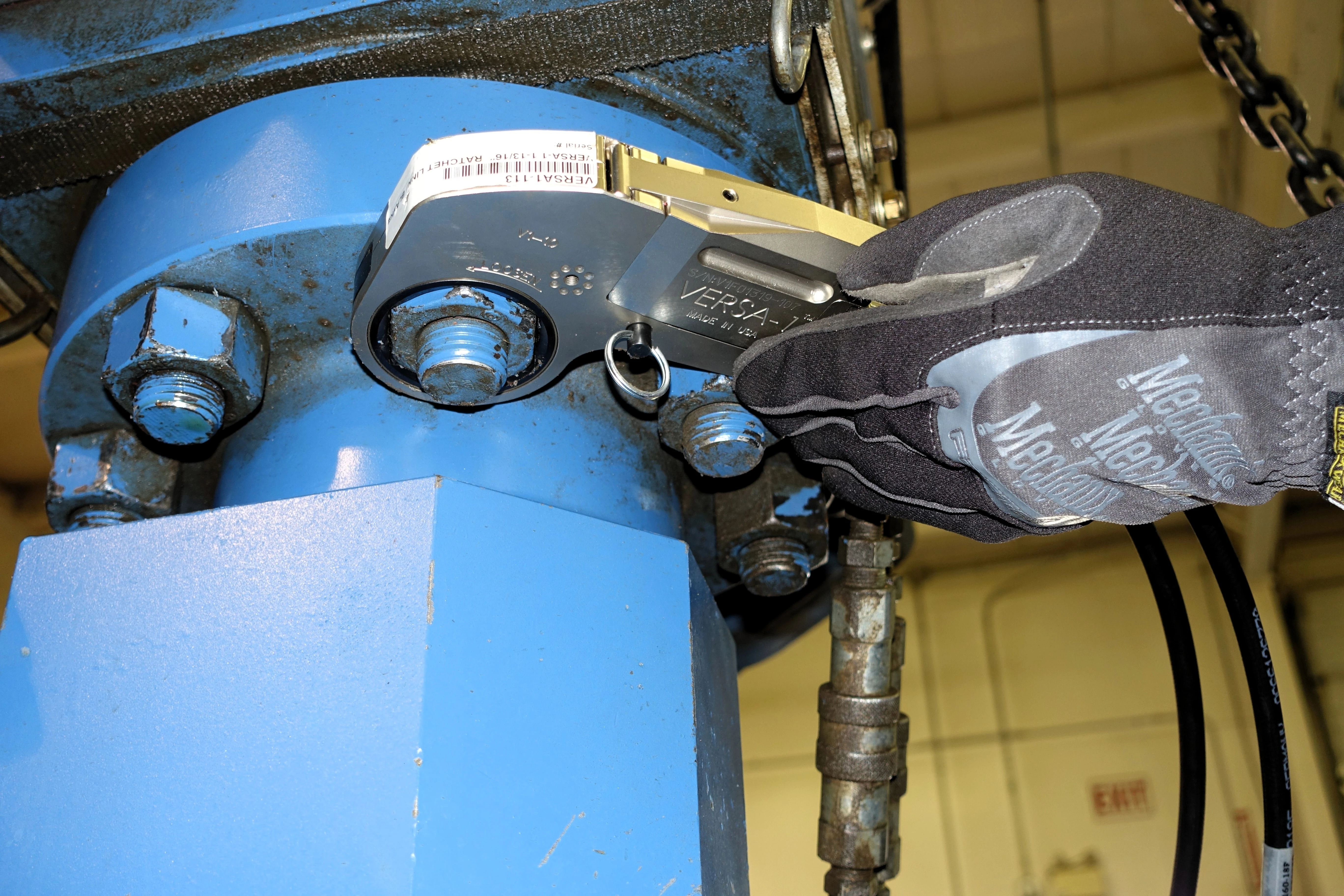
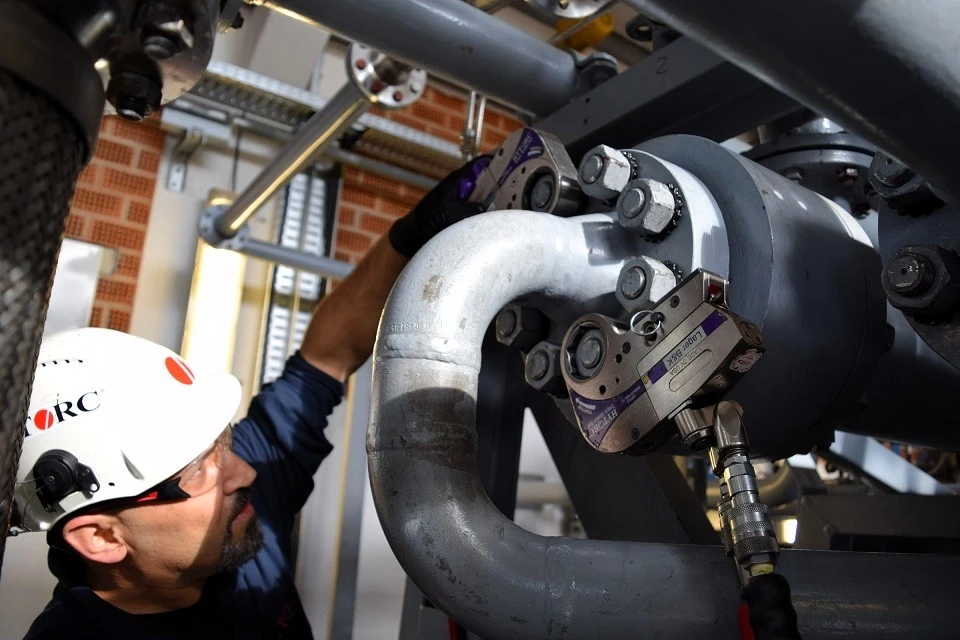
Before any torque tool is connected, inspect the complete joint: fasteners, gaskets, flange seating surfaces, and alignment. Defective components should be replaced, not reused, and flange misalignment corrected before tightening begins. Bolt load should not be used to force a misaligned joint together because uneven gasket loading can increase leakage risk.
- Fasteners and Gaskets: Inspect all bolts, studs, nuts, and flange faces for corrosion, thread damage, pitting, and/or deformation that would compromise clamping load. Verify bolt material grade and confirm it matches the joint specification. Check gaskets for storage damage, surface defects, and compatibility with the service medium.
- Flange Seating Surfaces: Inspect flange faces for surface finish condition, flatness, and serration integrity. Damaged seating surfaces should be addressed before assembly begins. No amount of torque will compensate for a compromised gasket contact area.
- Flange Alignment: Misalignment is a frequently cited cause of flange leakage. PCC-1 suggests that flange alignment (angularity, parallelism, pipe strain, and gap variation) is verified before bolting commences. Forced alignment using bolt load is specifically prohibited, as misaligned flanges distort gasket loading and increase leakage risk.
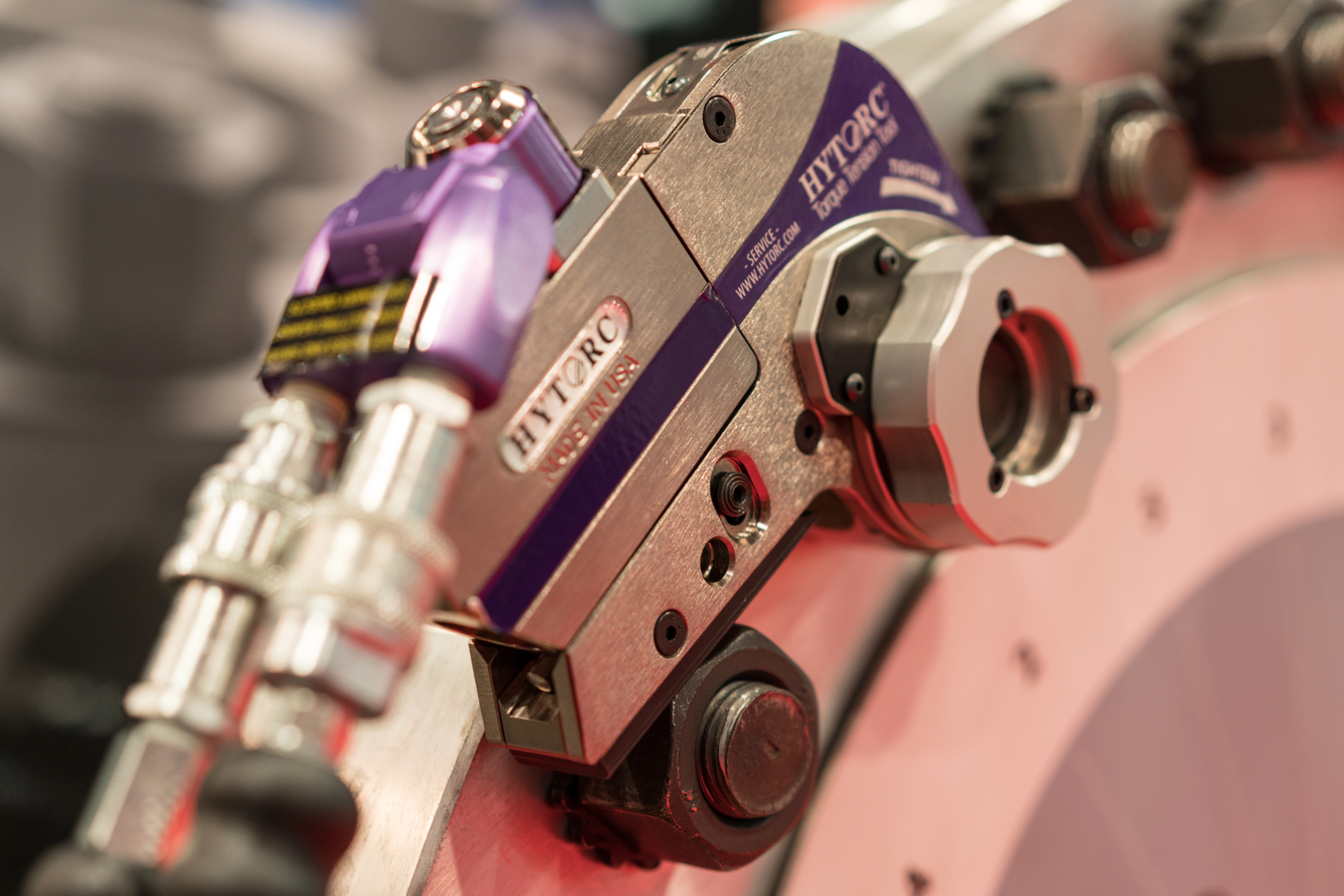
The HYTORC Solution: The HYTORC Washer and HYTORC Nut systems eliminate the need for separate reaction arms during the assembly phase. By converting torque directly into tension at the fastener level, thread galling during initial make-up is avoided. This prevents a common and costly problem on studs that have been in service or improperly stored.
How Does Bolt Lubrication Affect PCC-1 Torque Accuracy?
Consistent lubrication is essential because it directly affects friction, the nut factor (K-factor), and therefore the bolt load achieved for a given torque. Applying the same target torque to bolts with inconsistent lubrication can produce different clamping forces, which is why PCC-1 treats lubricant selection and application as an important assembly variable.
The nut factor (K-factor) is the primary friction input in the torque calculation formula of PCC-1. Friction variation of as little as 10 to 15% between bolts can result in significant scatter in actual bolt load, even when identical torque values are applied. Inconsistent lubrication is one of the most common and least acknowledged causes of joint integrity failure in field operations.
Use only lubricants specified in the joint assembly procedure or approved by the engineer of record. Make sure to record lubricant type, batch reference, and application method as part of your assembly documentation. Do not substitute lubricants without recalculating torque targets for the new nut factor.
Calculating Torque and Selecting Your Tool
How Do You Calculate Target Torque Under PCC-1?
PCC-1 provides the standard torque calculation formula used across industrial bolting operations. The correct torque target depends on factors, including gasket type, seating stress, bolt material grade, yield strength, lubricant nut factor, and flange class. Do not apply generic torque tables without confirming they account for your specific joint variables.
T = K × D × F
T = Target torque
K = Nut factor (friction parameter)
D = Nominal bolt diameter
F = Target bolt load
How HYTORC supports this step: HYTORC's online Flange Pattern Calculator can support standard ASME B16.5 and API 6A flange planning by outputting recommended torque values, pump pressure settings, tool selection, and bolting pattern. For non-standard flange configurations or extreme service conditions, contact HYTORC directly for an application-specific recommendation.
Which HYTORC Hydraulic Torque Wrench Should You Use?
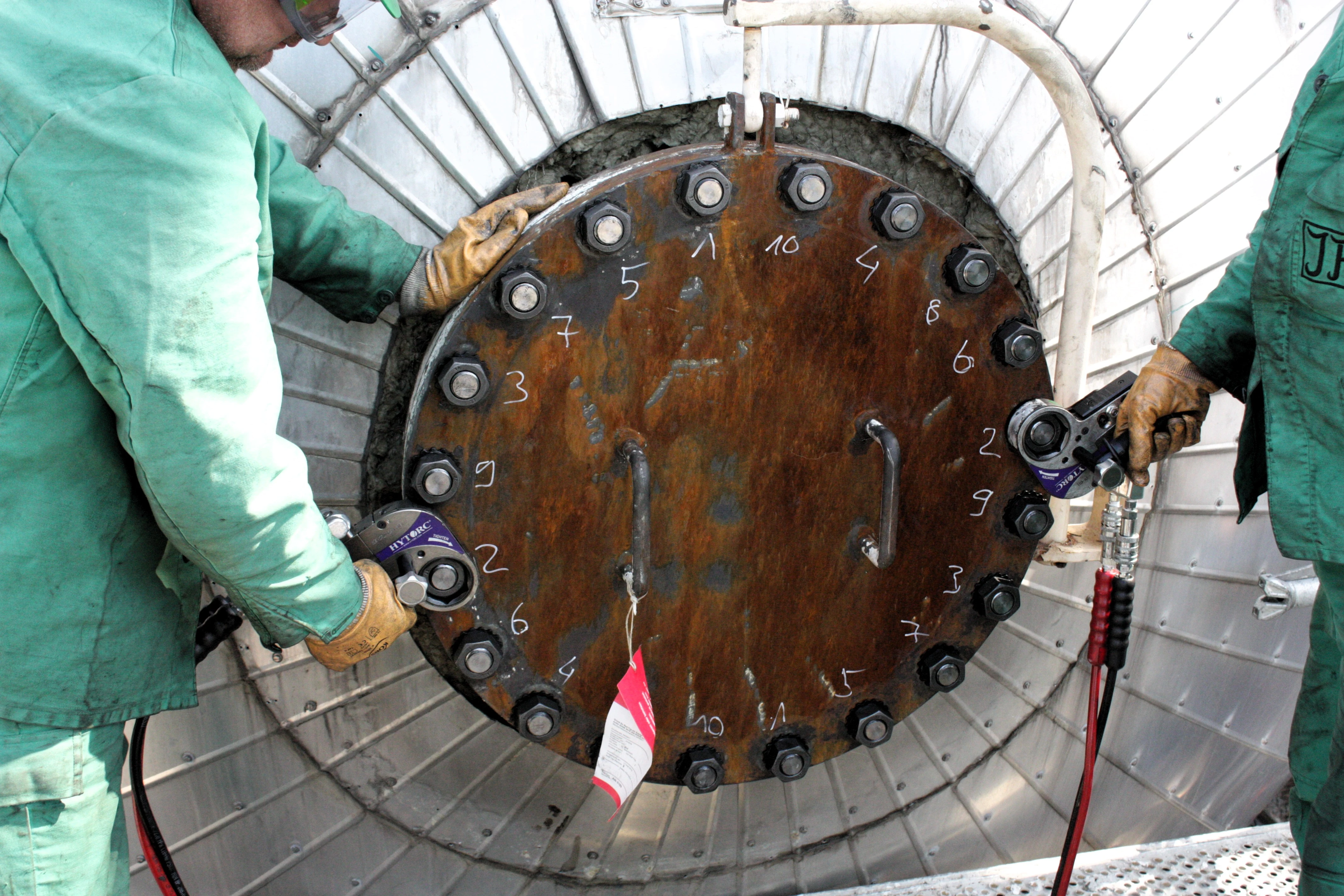
Select the hydraulic torque wrench by matching the required torque range, fastener size, access geometry, reaction method, and operating environment. MXT+ is designed for square-drive applications with open access, while STEALTH uses a low-profile direct-fit configuration for confined or restricted-clearance joints where conventional square-drive positioning is difficult.
HYTORC MXT+ Best for Open-Access Flange Bolting
• Best fit: Open flange environments across many ASME B16.5, B16.47 and API 6A applications where the required torque falls within operating range.
• Configuration: Square-drive hydraulic torque wrench with multiple reaction configurations
• Output range: 205 to 12,148 ft.-lbs.
• Reaction approach: Supports side reaction, rear reaction and reaction-free bolting when used with the HYTORC Washer system
• Key advantage: Very broad torque range and versatility where open access is available.
• Use-case consideration: Select where a square-drive arrangement suits the available access and where the ability to adapt the reaction method to the joint geometry provides an operational advantage
HYTORC STEALTH: Best for Restricted-Access Flange Bolting
• Best fit: Confined, overhead, or restricted-clearance flange joints.
• Configuration: Low-profile direct-fit hydraulic torque wrench with dual-piston power head.
• Output range: 277 to over 36,000 ft-lbs.
• Reaction approach: Compatible with HYTORC Washer and HYTORC Nut reaction-free systems.
• Key advantage: Slim form factor for joints where conventional square-drive tools cannot be positioned correctly.
• Use-case consideration: Match the direct-fit configuration to the fastener size and available clearance.
How Do You Choose Between MXT+and STEALTH?
Choose the MXT+ when the joint has open access, a square-drive configuration is suitable, and the required torque sits within its broad output range. Choose the STEALTH when clearance is restricted or a low-profile direct-fit tool is needed. In both cases, confirm torque range, fastener size, reaction method, access geometry, and operating environment before work begins.
Next in the series: Part 2: Multi-Pass Tightening Sequences and Safe Hydraulic Tool Operation. Once your joint is prepared and target torque is set, Part 2 covers multi-pass tightening sequence execution and safe hydraulic tool operation on the job site.
Achieve 100% PCC-1 Compliance on Your Next Turnaround
Fugitive emissions and joint leaks start with inconsistent bolt load. From reaction-free hydraulic tooling to digital joint documentation and ASME PCC-1 technician training, HYTORC delivers a turnkey flange integrity program for critical pressure boundaries. Contact a HYTORC bolting specialist today to audit your fleet or request an on-site consultation.