Case Study: Eliminating Gas Pipeline Leaks - How HYTORC Cut Downtime By 50% in South Africa
In the oil and gas industry, joint integrity is a matter of both operational efficiency and environmental and human safety. A recent case study involving a major gas pipeline in South Africa highlights the significant risks of outdated bolting methods and the huge productivity gains found in modern hydraulic solutions
Technical Project Specifications
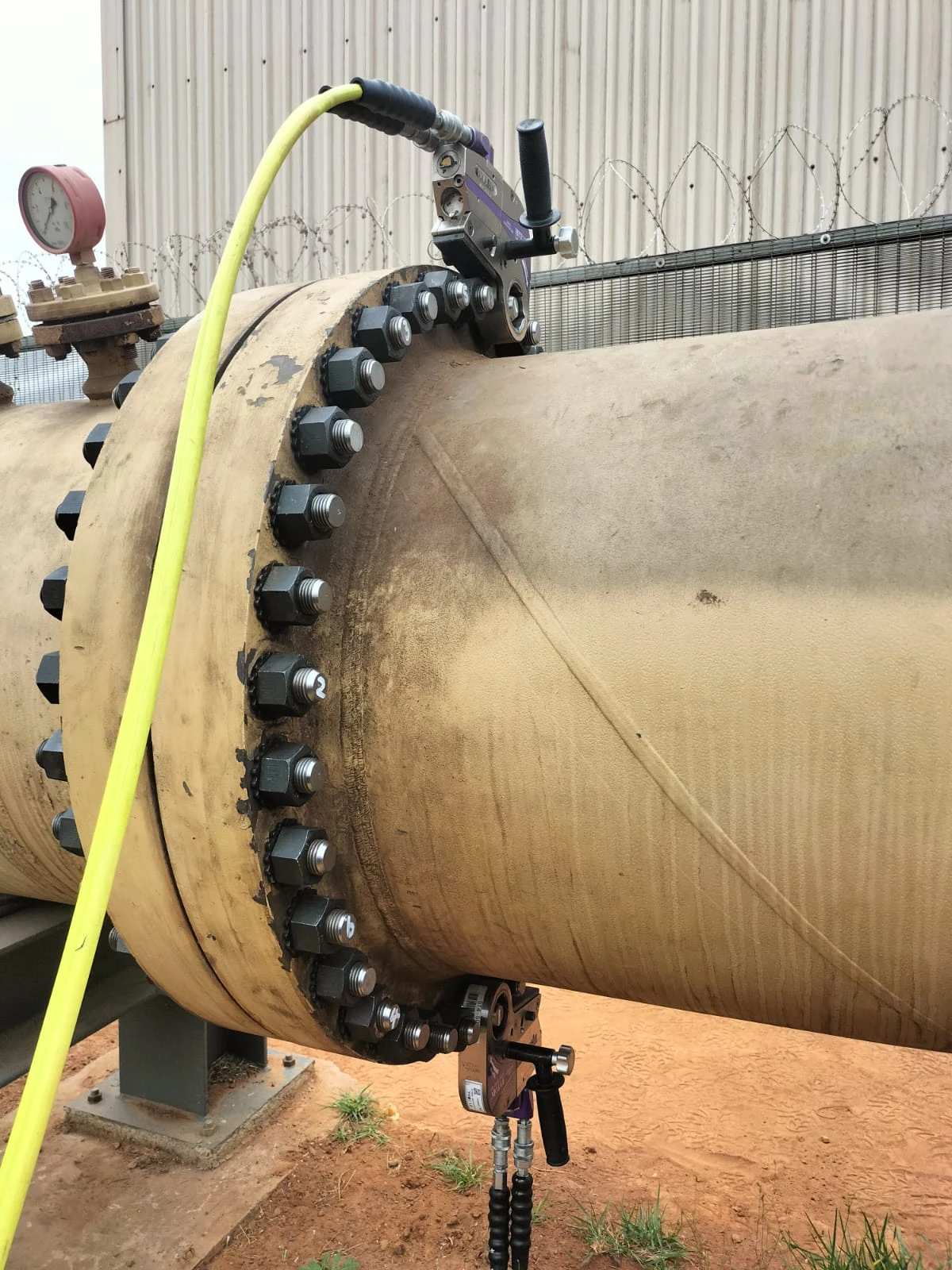
This specific gas pipeline application required high-precision tensioning to manage the following technical requirements:
- Bolt Size: M33 bolts
- Nut Size: 50mm A/F
- Thread Pitch: 3.5mm
- Bolt Count: 32 equally spaced bolts
- Target Torque: 3000 Newton-meters/2212.69 foot-pounds
Challenge: When Manual Flogging Fails
A major operator in the South African oil and gas sector was struggling with the closure of flanges on a main gas line using traditional manual flogging. This approach created several significant operational and safety hurdles:
- Excessive Gas Leaks: Manual tightening could not provide the consistent, high-precision load required to seal the flange effectively, resulting in persistent and excessive leaks.
- Safety Risks: Given the volatility of the gas application and the surrounding environment, these leaks were a high-priority safety concern.
- Constant Maintenance: Technicians were forced to do increasingly frequent check-ups just to verify the security of the bolts.
- Operational Inefficiency: The labor-intensive nature of manual bolting on a 32-bolt flange significantly extended maintenance windows.
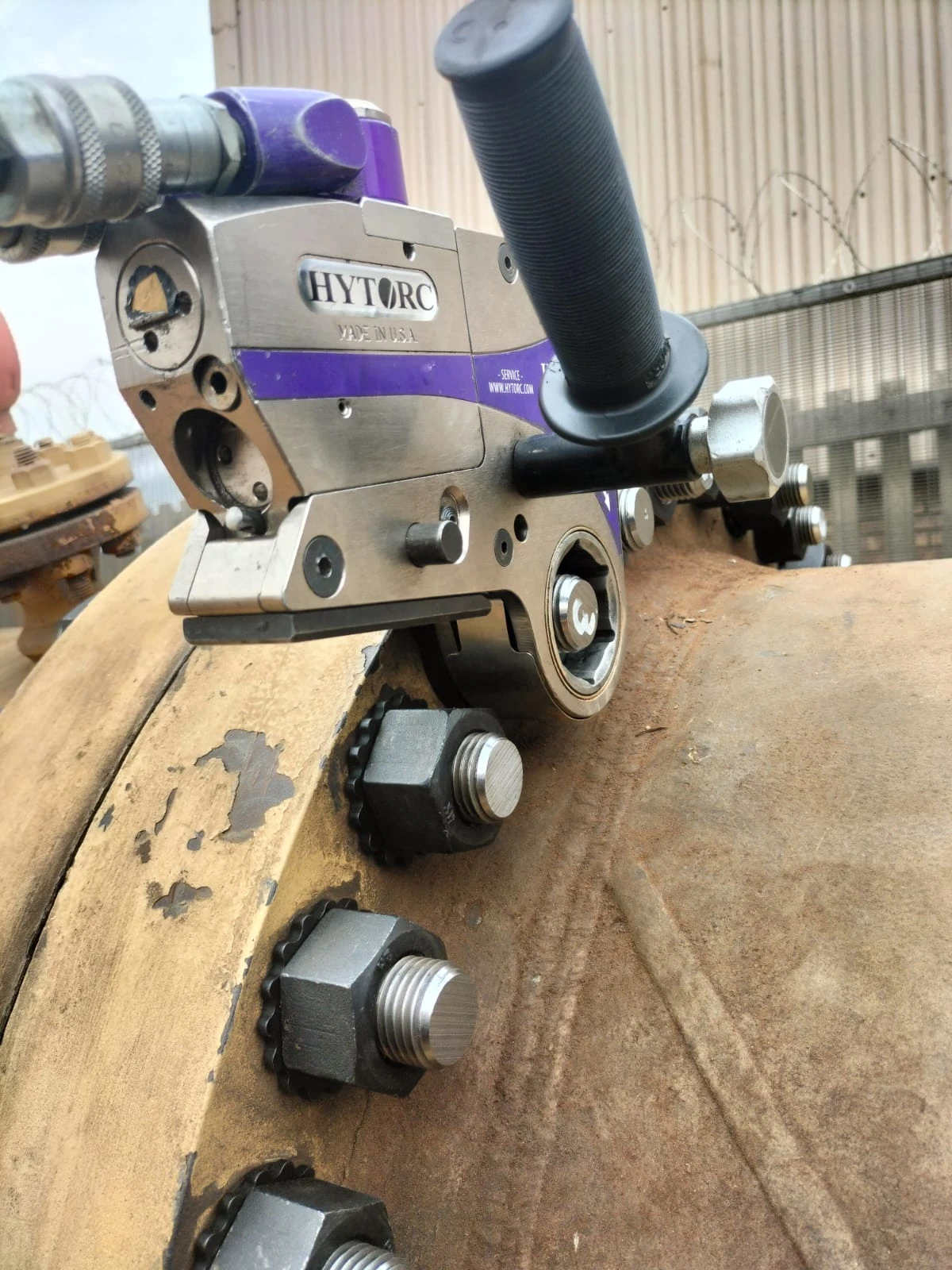
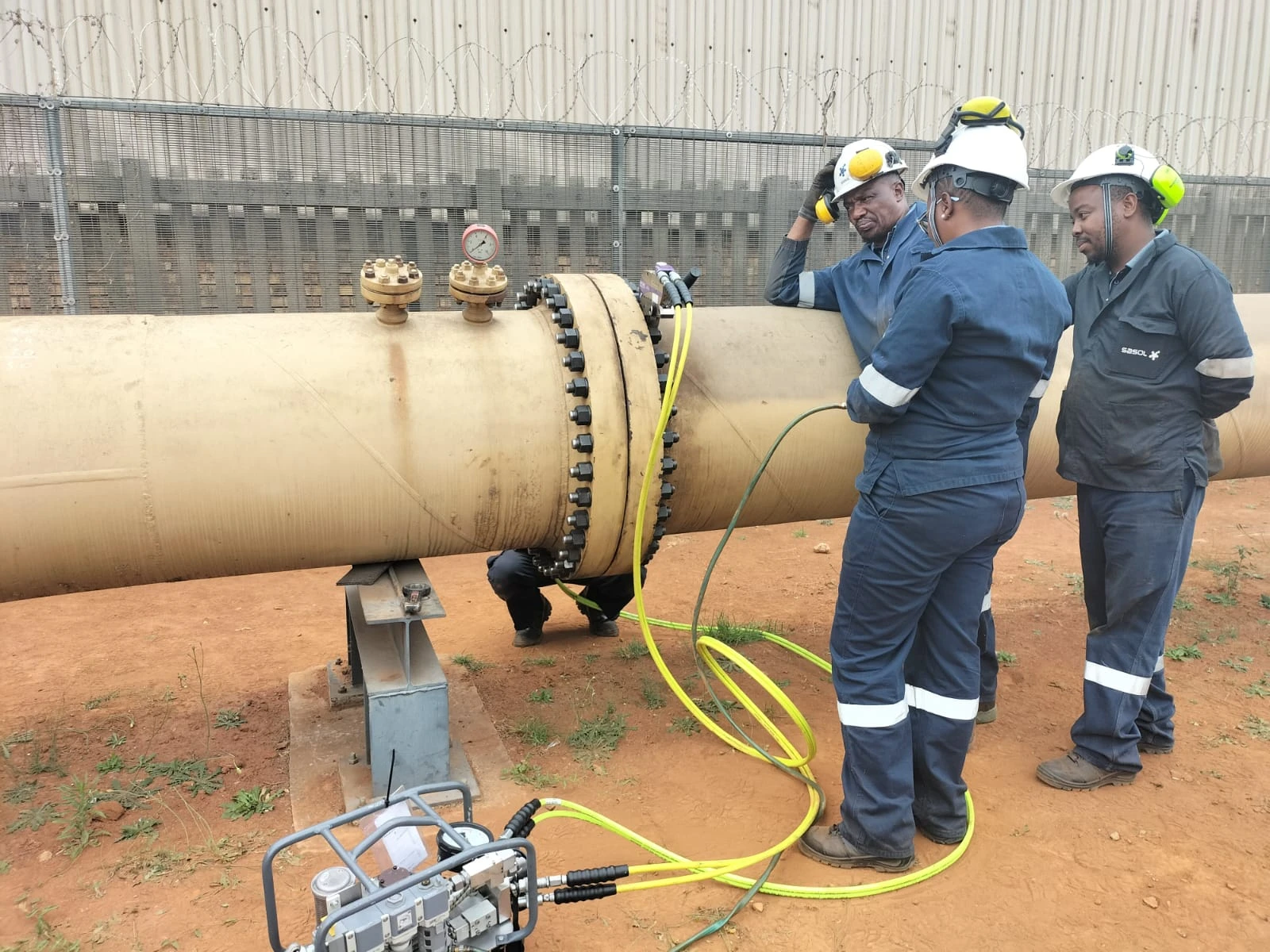
After HYTORC surveyed this application, it was apparent that the excessive leaking of LPG was causing a financial and environmental situation, with HYTORC’s offering of the Stealth Tool System in conjunction with the reaction and back up washer resulted in an expedited return to optimal service. --John Fairhurst, Corporate Account Manager: Africa
HYTORC Solution: Precision and Parallelism
Following a comprehensive site survey, HYTORC South Africa recommended transitioning to a controlled hydraulic system designed to ensure the flange was closed evenly.
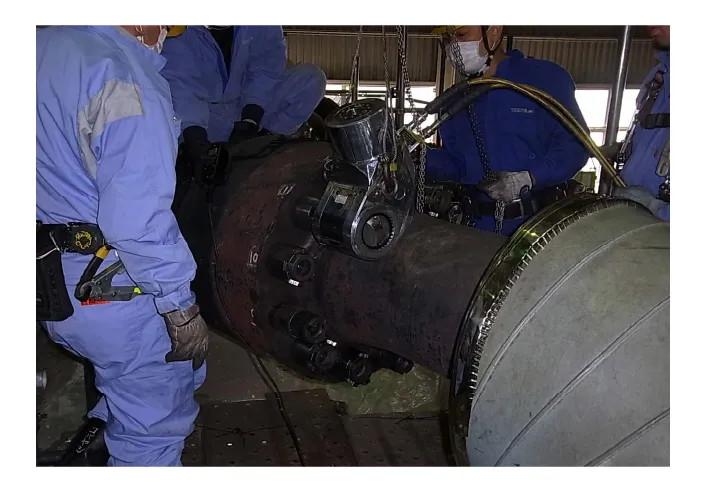
The solution utilized two HYTORC STEALTH tools powered by an air pump. By utilizing Simultorc , the team achieved parallel joint closure. This critical technique compresses the flange evenly across its entire surface at once, eliminating the distortion often caused by manual methods. To further streamline the process, the HYTORC Washer was used as allowing for a reaction-arm-free bolting process that increased both speed and operator safety.
Results: 50% Faster, 100% Sealed
The shift from manual flogging to the HYTORC STEALTH system delivered immediate, measurable improvements.
- Zero Leaks: No leaks were experienced following the implementation of the HYTORC solution, effectively managing the volatility of the gas line.
- 50% Downtime Reduction: The efficiency of using multiple STEALTH tools cut historical maintenance downtime by more than half.
- Enhanced Security: The precision of the 3,000 Nm (2,212 ft.-lbs.) application provided long-term bolt security, removing the need for frequent manual checks.
By using multiple HYTORC tools simultaneously, we ensured parallel joint closure and achieved a leak-free result.
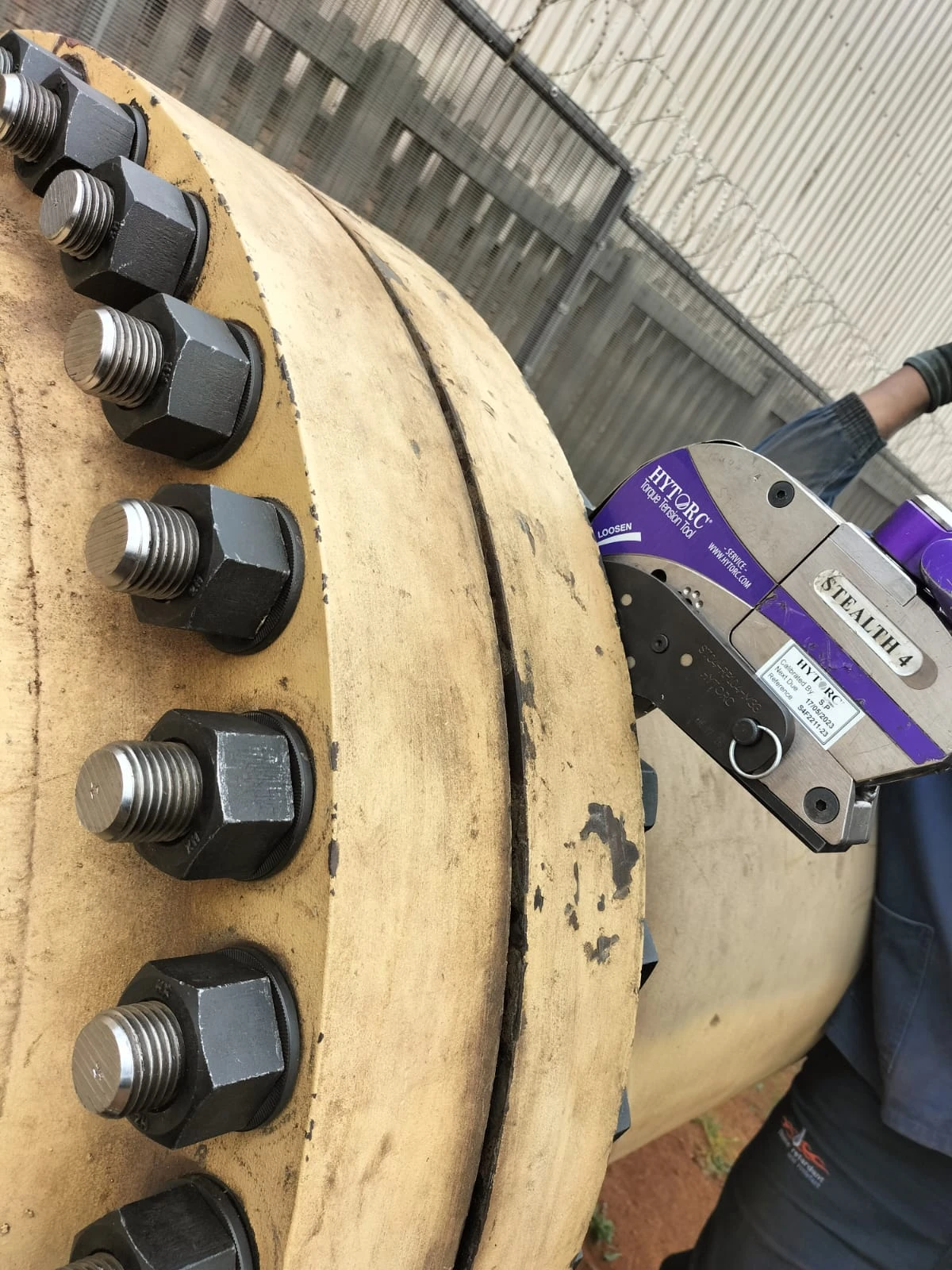
For operators in the oil and gas sector, the cost of manual bolting is often hidden in the form of recurring leaks and extended downtime. By upgrading to the HYTORC STEALTH and HYTORC Washer system for low-clearance bolting, this South African facility moved from a high-risk maintenance cycle to a streamlined, secure, and highly productive operation.